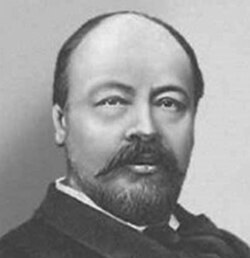
Anatoly Lyadov
Anatoly Konstantinovich Lyadov
29 April / 11 May 1855, Saint Petersburg — 15 / 28 August 1914, the Polynovka estate, near Borovichi, today in the Novgorod region.
Composer, conductor, music administrator, teacher. Honorary member of the Saint Petersburg Chamber Music Society.
He began to compose at the age of nine. His exceptional gifts showed themselves in a love of music, drawing, and poetry.
1867–1878
At eleven, Lyadov entered the Saint Petersburg Conservatory in the violin class of A. Panov and the piano class of I. Rybasov. Because of absences and undisciplined behaviour, however, he was expelled (1876). In 1878 he re-enrolled and in that same year passed his graduation examination brilliantly. He completed the conservatory in the composition class of N. Rimsky-Korsakov.
1873
Brought by Rimsky-Korsakov into “The Mighty Handful” circle, he embraced the artistic ideals of the new Russian school of composition.
1876
Published his first compositions.
1879
Began his conducting career.
1878–1914
Teacher at the conservatory: elementary theory and solfeggio in the junior classes (from 1878); professor of elementary theory, compulsory harmony, and solfeggio for performing students (from 1886); professor of the specialised theory and composition classes (1900–1914).
Among his pupils were the composers S. Prokofiev, B. Asafiev, N. Myaskovsky, M. Gnessin, V. Shcherbachov; the musicologists V. Belyayev and A. Ossovsky; the conductors N. Malko, M. Bichter, A. Pazovsky, L. Steinberg; the opera singers P. Andreyev, I. Ershov, and other well-known musicians.
From the end of the 1890s
He worked passionately on arrangements of folk songs collected on expeditions of the Imperial Russian Geographical Society. He produced more than 200 arrangements of old peasant songs, including the famous orchestral miniature cycle Eight Russian Folk Songs, built on authentic folk melodies — epic, lyrical, dance, ritual, and round-dance.
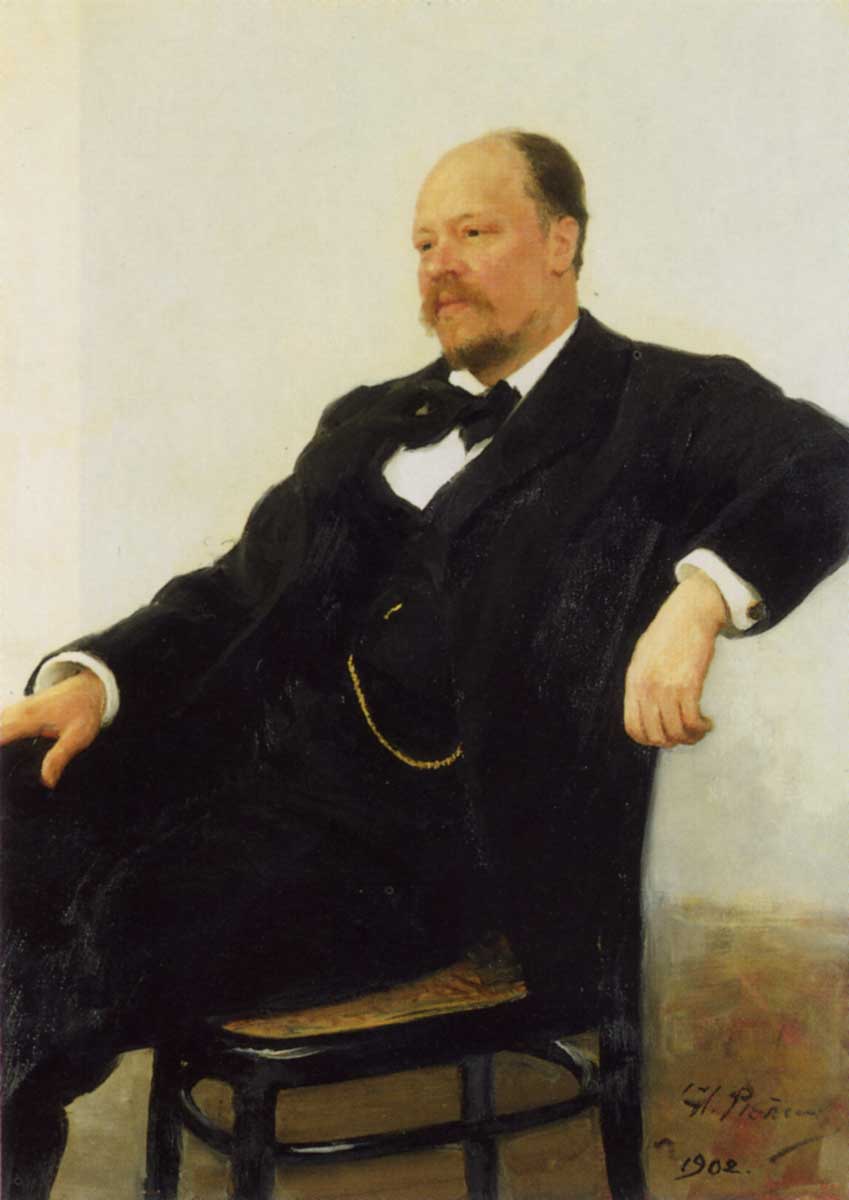
Anatoly Konstantinovich Lyadov. Portrait by I. Repin (1902).
1905–1914
The last period of his work is associated with programmatic symphonic miniatures, in which sophisticated harmonies inherited from A. Scriabin and the late N. Rimsky-Korsakov are integrated with ancient diatonic modes.
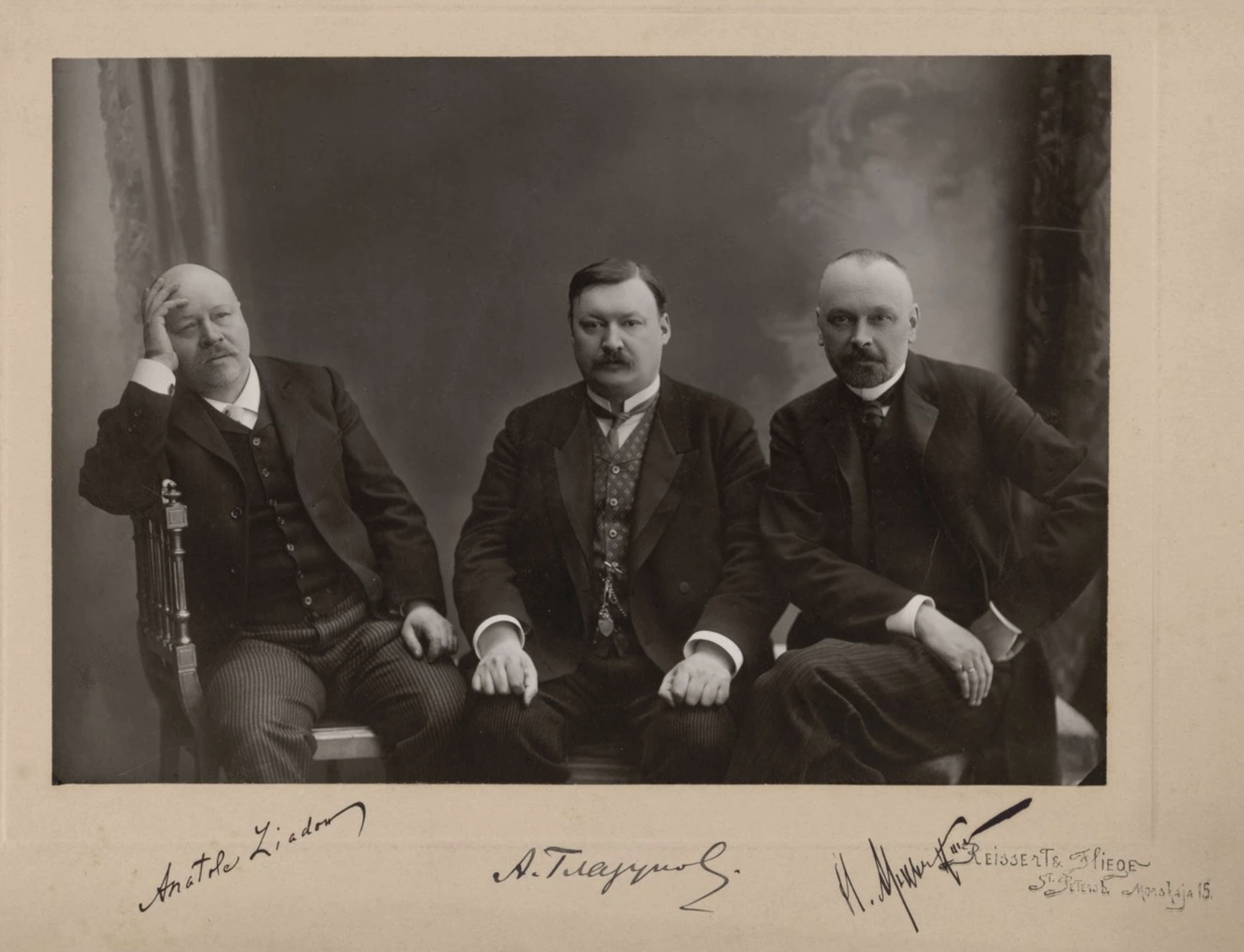
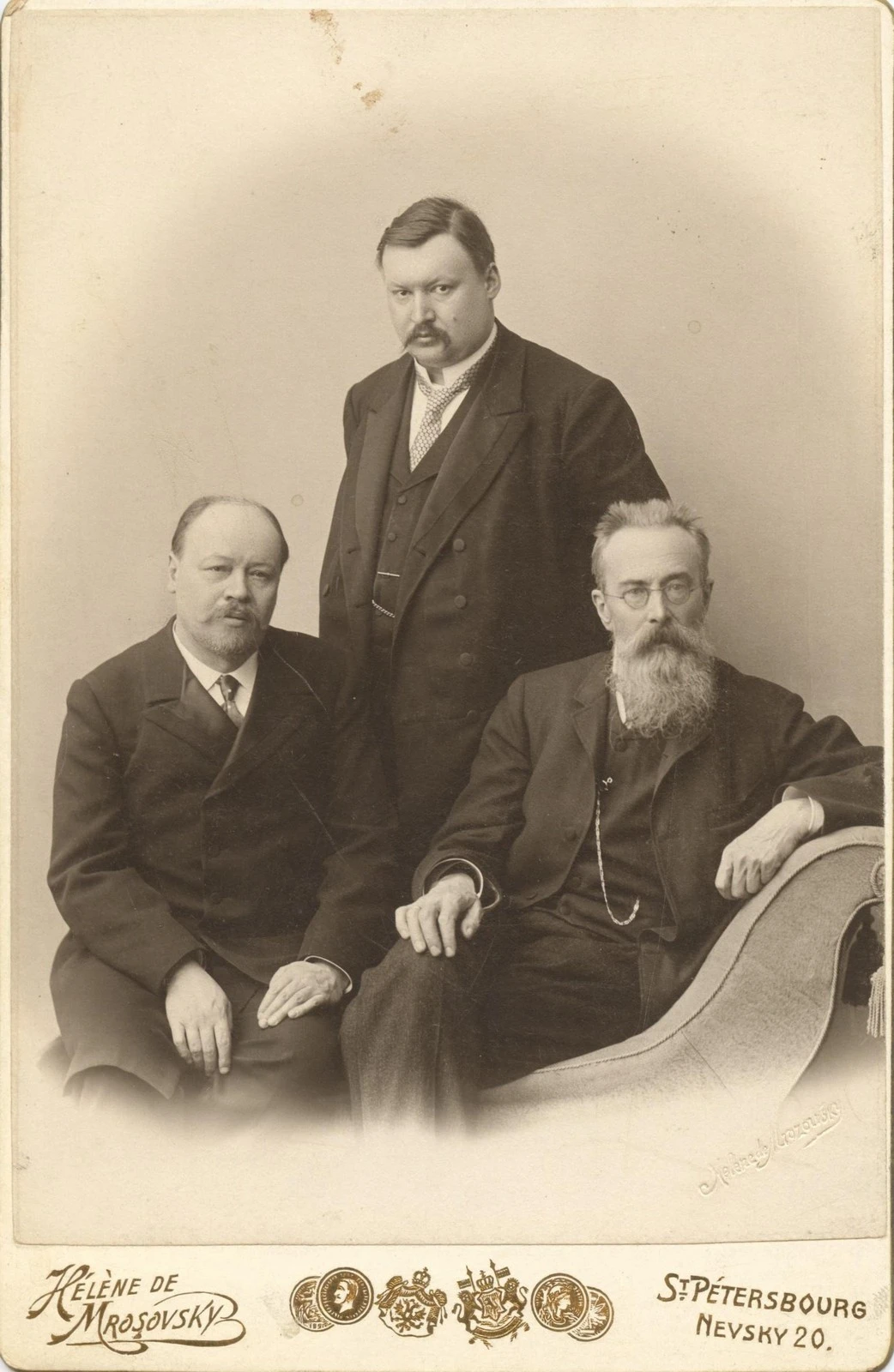
Left — A. Lyadov, A. Glazunov, and N. Artsybushev. Saint Petersburg, 1910s; Right — A. Lyadov, A. Glazunov, and N. Rimsky-Korsakov. Saint Petersburg, 1905.
1914
Buried in Saint Petersburg at the Novodevichy Cemetery. In 1936 his remains were transferred to the Necropolis of Masters of the Arts at the Alexander Nevsky Lavra.
Anatoly Konstantinovich’s engagement with sacred music was relatively small — chiefly his “Hourly Prayer of St Joasaph of Belgorod” (1910) and the collection “Ten Settings from the Obikhod” (1909).
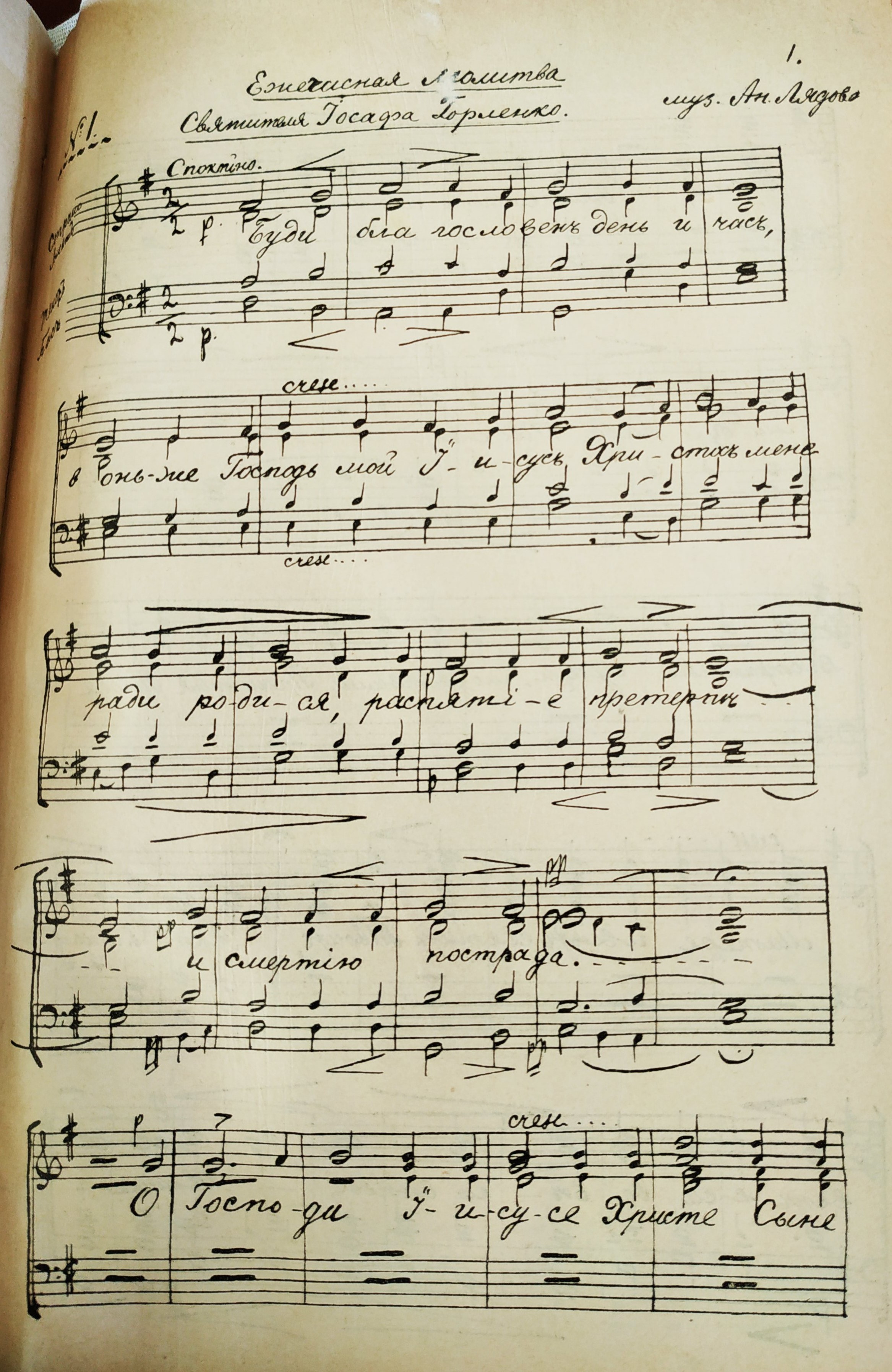
The first page of the score of A. K. Lyadov's *Hourly Prayer of St Joasaph of Belgorod*.
A verse-letter to N. Abramychev, written by Lyadov in imitation of Pushkin (in the original Russian):
Уж лето красное промчалось.
Так дни за днями и бегут…
Недолго жить мне здесь осталось,
Опять – за ненавистный труд.
Чтоб обучать девиц, мальчишек –
Терпенья должен быть излишек;
А я устал уже давно
Твердить год целый всё одно.
Как жалок тот, кто поясняет
Глухому – звук, слепому – цвет,
Ей Богу, проку в этом нет,
Лишь время попусту теряет!
К такому делу еду я –
Печальная судьба моя!
Pieces by this composer
- Херувімская песня — Anatoly Lyadov ( PDF , MP3 )