
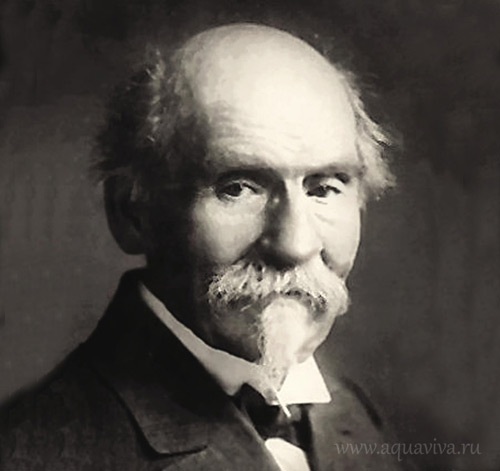
Alexander Arkhangelsky
Alexander Andreyevich Arkhangelsky
11(23) October 1846, the village of Staroye Tezikovo, Penza Governorate — 16 November 1924, Prague. Russian choral conductor, composer, Honoured Artist of the Republic (1921).
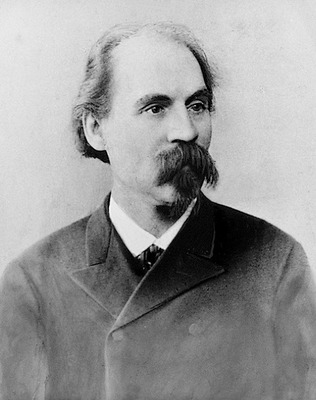
He entered the Medical-Surgical Academy in Saint Petersburg (1870) in pursuit of higher education. Without finishing the academy, he passed by external examination the demanding examination for choir director at the Imperial Court Chapel (1872). He was assigned as choir director to the Sapper Battalion. His salary did not suffice, and he had to work as an accountant on the side.
Founder of one of the finest private choirs in Russia (1880), which gave concerts throughout the country and abroad. He also founded a church-singing charitable society which provided material assistance to ailing choristers and their families (1901).
Appointed chief inspector of the Most Holy Synod for the organisation and inspection of church choirs (1906). The journal Music and Singing unleashed a campaign against him: he was called “a choral disciplinarian”, “a gendarme-general of the kliros”. Evidently, choir directors who had no wish to change established practices were not pleased. But more impartial assessments prevailed, so that the same journal would later call the composer “the founder of serious Russian choral work and the only choral conductor whose equal does not exist in Europe”.
Despite his professional renown, in everyday life he was a simple and humble man. All the choirs he worked with adored him.
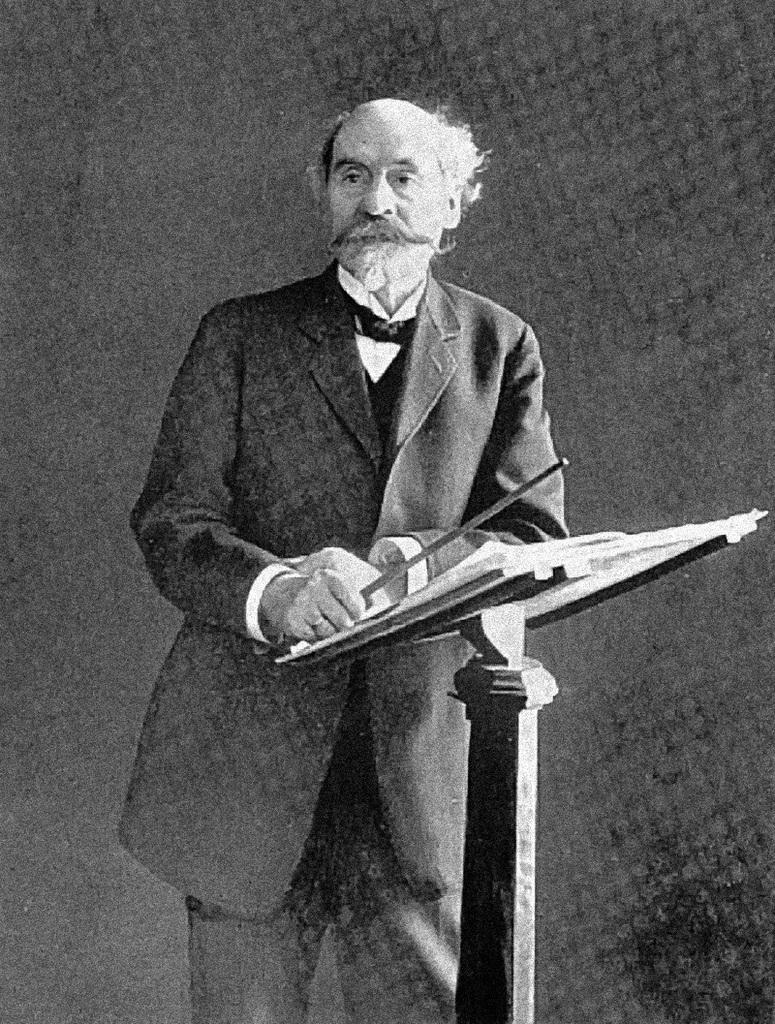
He did not accept the revolution and in 1923 left Russia for Prague, where he took over the leadership of the General Russian Students’ Choir.
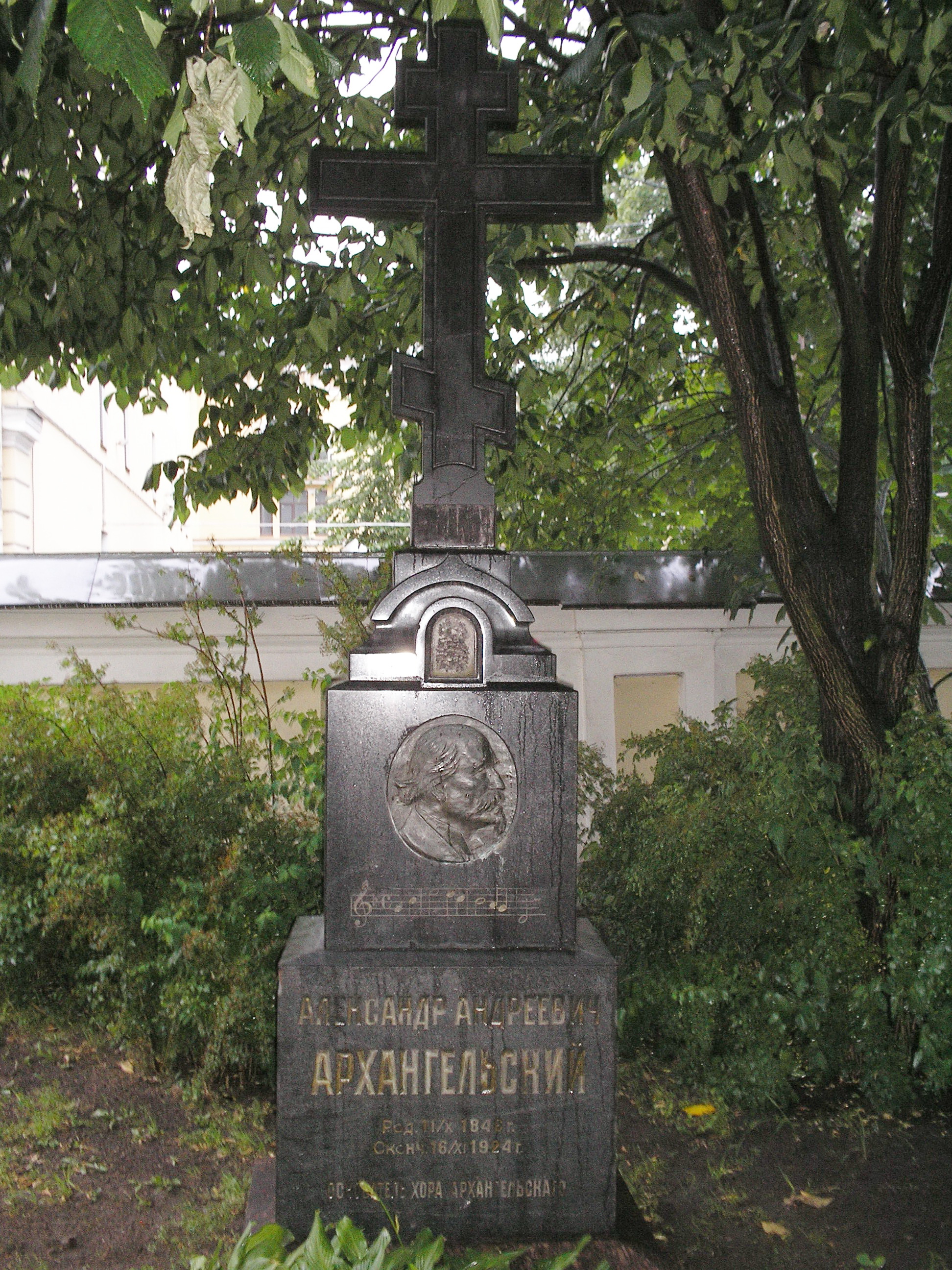
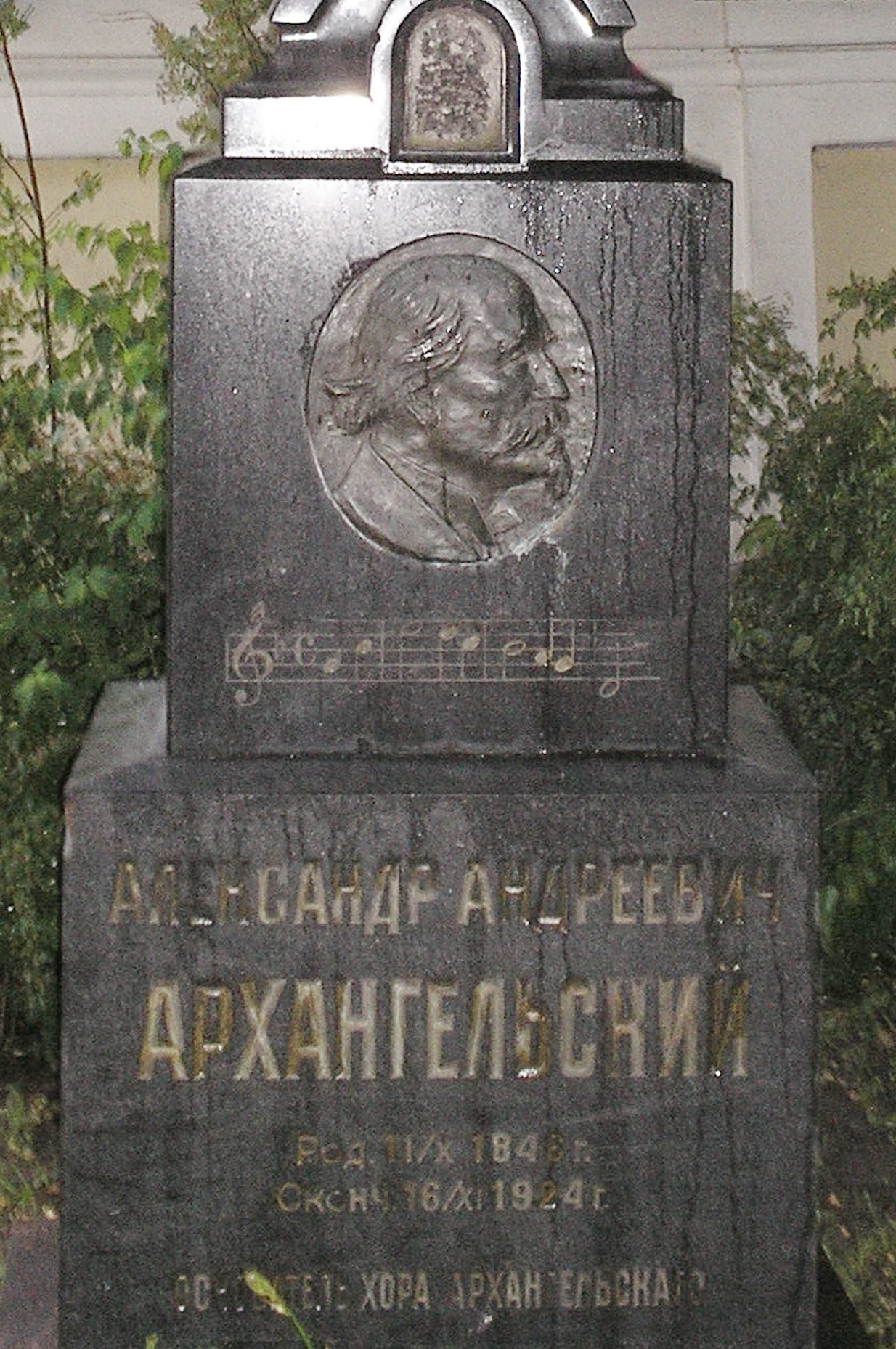
On 16 November 1924, shortly before the start of a regular rehearsal, he died of sudden cardiac arrest. In accordance with his last will, his ashes were buried in Leningrad in 1925.
Sadly, in 1924 Arkhangelsky’s apartment in Petersburg was looted, and his entire archive (unpublished manuscripts, correspondence with Russian composers, concert programmes, and press reviews) disappeared.
Arkhangelsky brought about a true revolution in Orthodox singing. He was one of the first (1880) to replace boys’ voices in the church choir with women’s voices (sopranos and altos). At first this was 20, then up to 90 singers. This gave liturgical singing a new depth and emotional range.
His collection *Chants of the Divine Liturgy* became a classic and is still used in churches all over the world.
He made hundreds of folk-song arrangements, but it was through sacred music that he sought to convey to listeners the high culture of the "strict style". He brought church music closer to a wider audience, making it more accessible and expressive while preserving its spiritual essence.
His composition *Chants of the Divine Liturgy* has become a classic and is still used in Orthodox churches across the world.
According to the testimony of the composer F. Nikishin,
“It was rare to meet people who, to the very end of their days, embraced life so joyfully. Anyone who, like me, saw the tender light in Alexander Andreyevich’s eyes during his sad time of illness will understand why he never ended a musical thought on a sad verse of a psalm, but always brought it to a comforting resolution.”
So it does not seem accidental that Alexander Andreyevich opened many of his manuscripts with a simple, touching prayer: “O Lord, I cry unto Thee, hear me”.
|
|
Engraved on the headstone — a melody from a work by Arkhangelsky: "Hear, O God, my prayer".
Pieces by this composer
- Няхай будзе імя Гасподняе — Alexander Arkhangelsky ( PDF , MP3 )
- Мы ўбачылі — Alexander Arkhangelsky ( PDF , MP3 )
- Вечная памяць — Alexander Arkhangelsky ( PDF , MP3 )