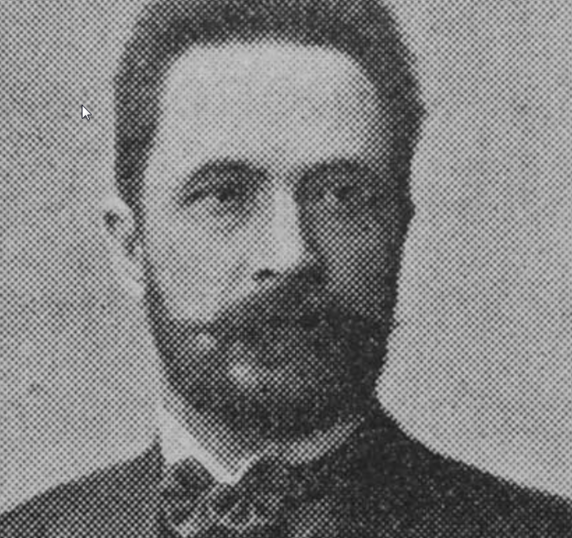
Mikhail Antsau
Mikhail Vasilievich Antsau
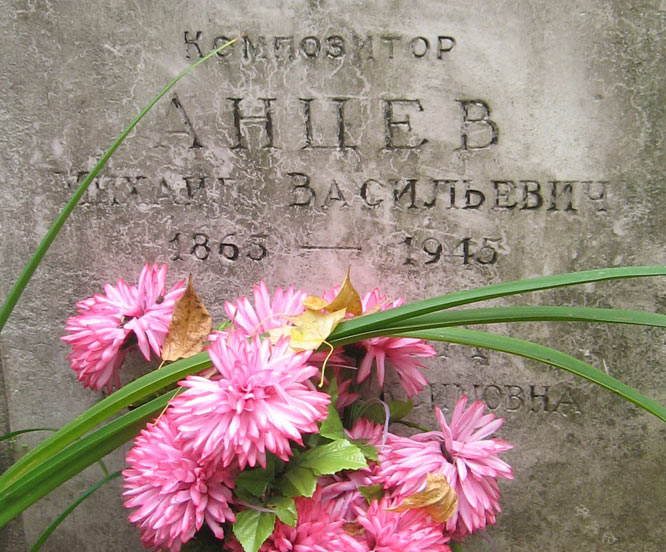
30 September 1865, Smolensk — 21 July 1945, Moscow. Composer, teacher, music critic, master of choral music.
1886
Studied at the Warsaw Music Institute in the violin classes of G. Friman and S. Bartsevich and the composition class of Z. Noskovsky.
1894
Graduated from the Saint Petersburg Conservatory in the classes of Y. I. Johansen (harmony, counterpoint) and N. Rimsky-Korsakov (composition).
1894–1896
Taught singing at the Elisabeth Institute in Saint Petersburg.
1896
Taught choral singing in various schools in Vitebsk.
1905–1912
Editor of the newspapers Vitebsk Provincial Gazette and People’s Leaflet, member of the Vitebsk Archival Commission.
1917
He was one of the first composers to take up revolutionary themes.
1918
Founded the People’s Conservatory (where he gave lectures on the history and theory of music), as well as a Belarusian song circle.
In March, as part of a delegation with A. Bessmertny and B. Sukhodryev, he presented to the People’s Commissar A. Lunacharsky in Petrograd a project for organising musical life in Vitebsk.
1920
Director and conductor of the State Choir, which he organised at the Vitebsk District Music Department.
Early 1930s
Moved to Moscow.
1936–1938
Member of the certification and expert commission of the Department for the Arts in Moscow.
21 July 1945
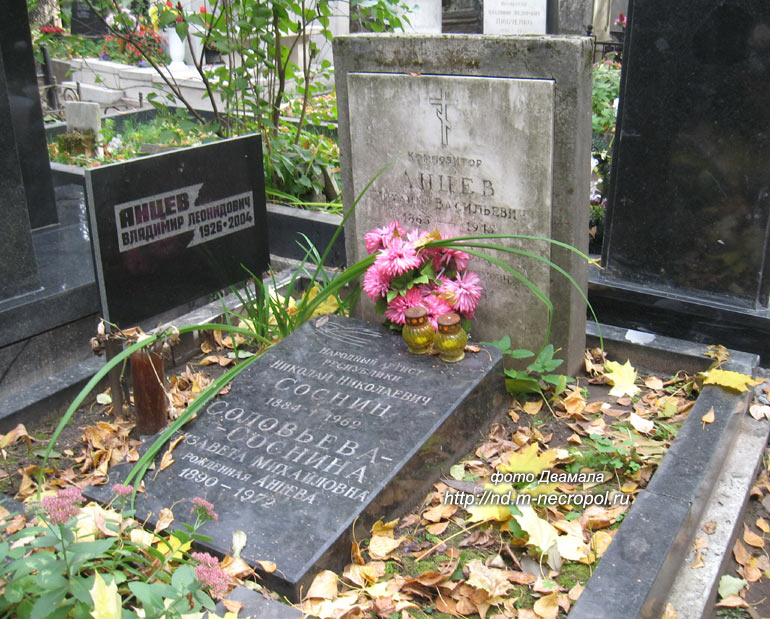
Died in Moscow. Buried at the Novodevichy Cemetery.
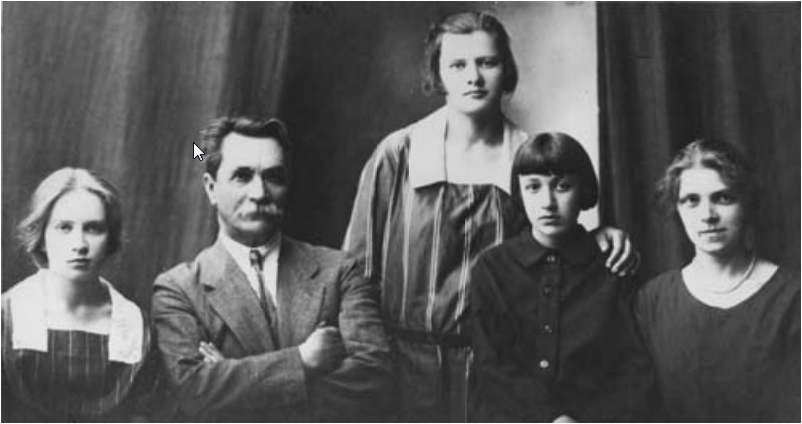
M. V. Antsau's class in theory and harmony at the Vitebsk Vocational Music School, 1930.
Maximova L. P., Antsau M. V., Dekanova (?), Sigalova F.
Author of Liturgies for mixed choir, and of choruses and songs to verses by Belarusian poets Y. Kolas, M. Charot, Y. Kupala, and others. Among his works are arrangements of the Belarusian folk songs In the Field There Is a Willow, My Dear Godmother, Ho-ho-ho, Goat, Splinter, Splinter, and romances.
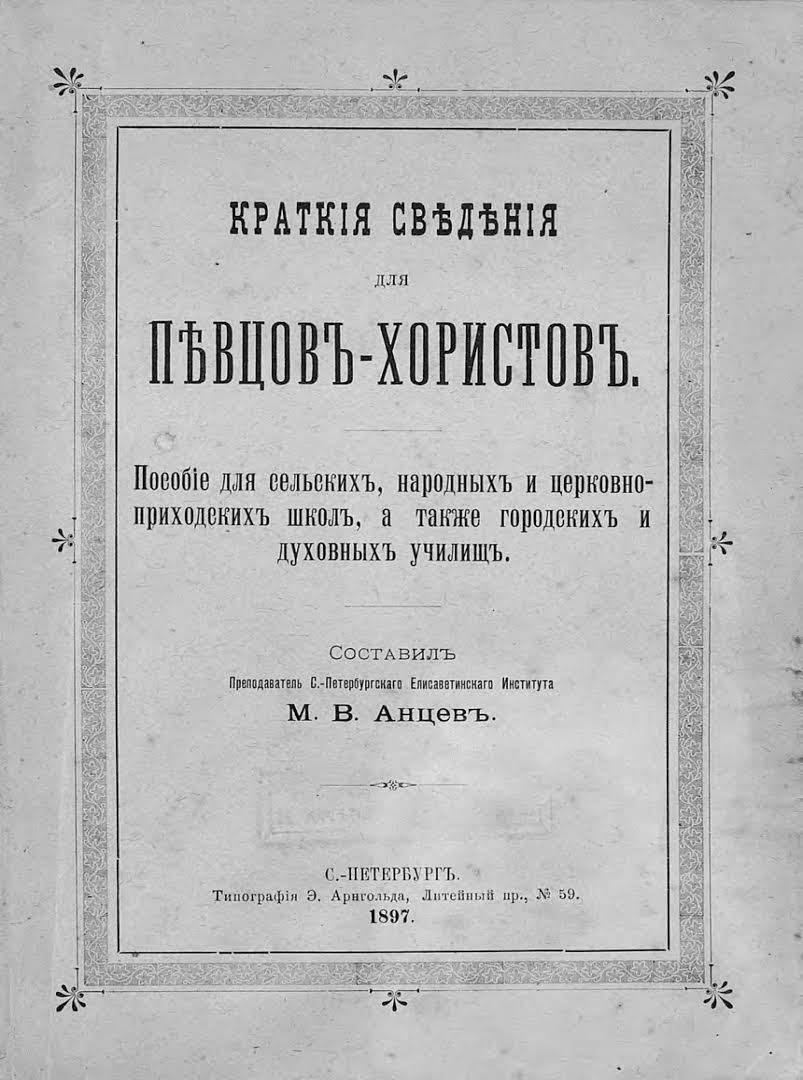
Author of educational manuals and methodological works, including Music Notation Terminology: A Reference Dictionary (Vitebsk, 1904).
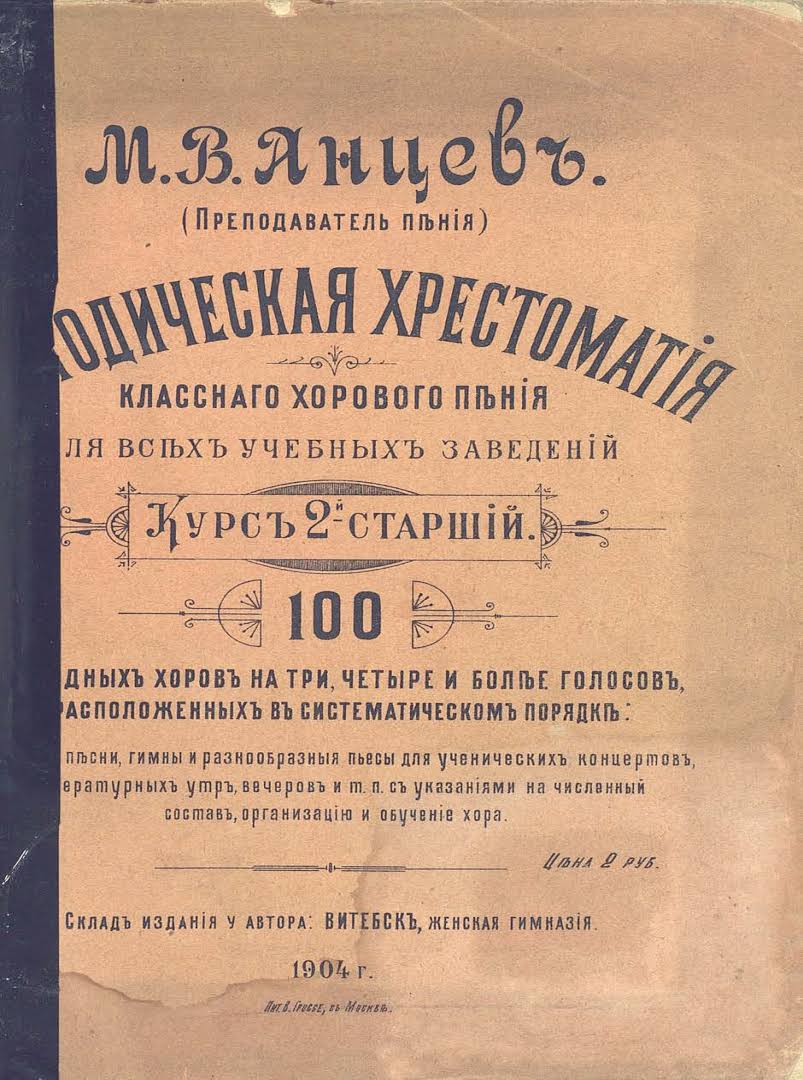
He wrote works for violin and piano, romances and songs, and melodeclamations. His output includes a string quartet (1898), a sonata for violin and piano (1898), and nine pieces (1897). In musical circles he is known above all as a composer of large-form works intended for performance by choir with orchestra.
He composed more than 30 a cappella choruses (with and without accompaniment), many choral arrangements of folk songs, sacred works, piano music, instrumental music, and works for violin and orchestra.
In Antsau’s sacred works the prevailing texture is harmonic, but the expository sections sometimes employ imitative forms, including canons. Antsau treats the Liturgy as a single musical cycle, grouping the chants by thematic or tonal principle (litanies, the chants of the Eucharistic canon).
The overall character of his Liturgy recalls the works of composers of the New Direction — in particular Arkhangelsky and Chesnokov — and also of their great predecessor Tchaikovsky. Antsau’s Liturgy lacks the harmonisations of ancient chant melodies that are characteristic of the sacred works of New Direction composers; the author leans rather on the tradition of the Saint Petersburg style of the time of “Russian classicism”, reshaped by the achievements of late-19th-century musical art.
Sadly, much of the composer’s legacy has been lost and has not reached our day.
Many of his works were published and performed abroad in Europe.
Pieces by this composer
- Прыйдзіце паклонімся — Mikhail Antsau ( PDF , MP3 )
- Херувімская песня №1 — Mikhail Antsau ( PDF , MP3 )
- Херувімская песня №2 — Mikhail Antsau ( PDF , MP3 )